Every AR automation vendor in the market right now claims to be AI-powered. The websites are full of the same language: autonomous agents, intelligent matching, predictive analytics, agentic AI. Walk into any sales demo and you will see a dashboard that says 95% auto-match and a case study that says 30-day DSO reduction.
The problem is that the market has no agreed-upon standard for what "AI-powered" means in AR automation. A platform that added a GPT-drafted email template to a rule-based dunning workflow can call itself AI-powered. A platform with an AI system trained on nearly $9 trillion in proprietary B2B payment data calls itself AI-powered. These are not the same thing — not even close — and the difference matters enormously when you are deciding which platform to bet your AR operations on.
This post is a platform-by-platform breakdown of who is actually AI-powered in 2026, what the independent analysts say (and don't say), where the honest limitations are, and the six questions you need to ask before you sign a contract. We evaluated 14 platforms across three tiers based on publicly available research, analyst reports, G2 reviews, and the one place where the distinction between real AI and marketing AI is stated most clearly: the Gartner Magic Quadrant.
The Only Independent Benchmark That Names Names
Before going platform by platform, you need to know what the independent analyst landscape actually looks like — because it is much thinner than vendors would have you believe.
The Gartner Magic Quadrant for Invoice-to-Cash Applications is the most prominent public named-vendor evaluation identified in this research. Gartner defines the I2C market as "cloud-based applications that enable corporate controllers to automatically manage collections and apply customer payments to invoices" — covering customer invoicing, collections, customer payments, and cash application as mandatory capabilities, plus dispute management and credit monitoring. As of August 8, 2026, the May 2024 edition is the most recent publicly confirmed Gartner Magic Quadrant for Invoice-to-Cash Applications identified in public sources.[1]
Five vendors were evaluated in the 2024 MQ:
| Vendor | 2024 Quadrant Position | Notes |
|---|---|---|
| HighRadius | Leader | Highest for both Ability to Execute and Completeness of Vision; third consecutive year |
| Esker | Leader | Second consecutive year |
| Sidetrade | Leader | Third consecutive year |
| Billtrust | Challenger | — |
| Emagia | Visionary | Third consecutive year |
The May 2024 Gartner I2C MQ evaluated only these five vendors. The other platforms discussed in this article were not included in that specific assessment.[1]
The Everest Group O2C Products PEAK Matrix 2025 (published October 2025) provides a second independent data point and evaluated a broader set: HighRadius, Billtrust, and Emagia were all named Leaders.[2] Esker and Sidetrade's Everest Group positions were not confirmed in publicly accessible sources — practitioners should verify directly. The Forrester "Top AI Use Cases for Accounts Receivable Automation 2025" (published March 2025) is not a competitive ranking — it is a use-case research document that named HighRadius and Quadient as examples of cash application AI, and Quadient specifically for ML-based email categorization and genAI email replies.[3]
The AR automation market is currently estimated at $3.44 billion in 2025, projected to reach $3.84 billion in 2026, growing at approximately 11.6% CAGR through 2031.[4] That growth is attracting new entrants and driving incumbent vendors to expand AI feature claims aggressively. The gap between what is independently validated and what is marketed is wide.
The AI Reality Check — What the FTC and Regulators Are Actually Saying
Before evaluating platforms, you need the regulatory and analyst context for the AI claims themselves.
In September 2024, the FTC launched "Operation AI Comply" — a coordinated sweep of five enforcement actions involving alleged deceptive AI claims and AI-enabled schemes. The actions were not limited to enterprise-software vendors or enterprise AI-capability claims.[5]
By August 2025, the FTC had brought additional AI-related enforcement actions, including Air AI. Legal analysis characterized the Air AI matter as potentially the first FTC consumer-protection action focused specifically on agentic-AI and employee-replacement claims.[5]
The SEC has expanded its enforcement record on the same theme. The first AI-washing actions came against investment advisers Delphia and Global Predictions in March 2024. Since then, the SEC charged Presto Automation in January 2025 for misleading AI product statements, and filed against Nate founder Albert Saniger in April 2025 for allegedly raising more than $42 million through false AI capability claims.[5]
The pattern is clear: the regulators are watching, and the standard for substantiating an enterprise AI claim is rising. Every vendor claim in this evaluation should be read in that context.
In the AR automation space specifically, Gartner provided a notable publicly quoted example of identifying AI-capability limitations in an AR-platform assessment. In the 2024 Magic Quadrant, Gartner stated of Billtrust: "Billtrust's solutions have limited AI capabilities compared to other vendors in this Magic Quadrant, aside from customer-specific machine learning (ML) models in cash applications and the use of customer payment behavior to predict cash flow and optimize collections strategies."[1]
This matters because Billtrust is a well-established platform with a long operating history — if Gartner identifies AI-depth limitations in a platform of that standing, newer platforms with less track record deserve proportionally more scrutiny. The specific capabilities Gartner called out — collections prioritization and dispute prediction — are precisely the capabilities most vendors are now marketing most aggressively.
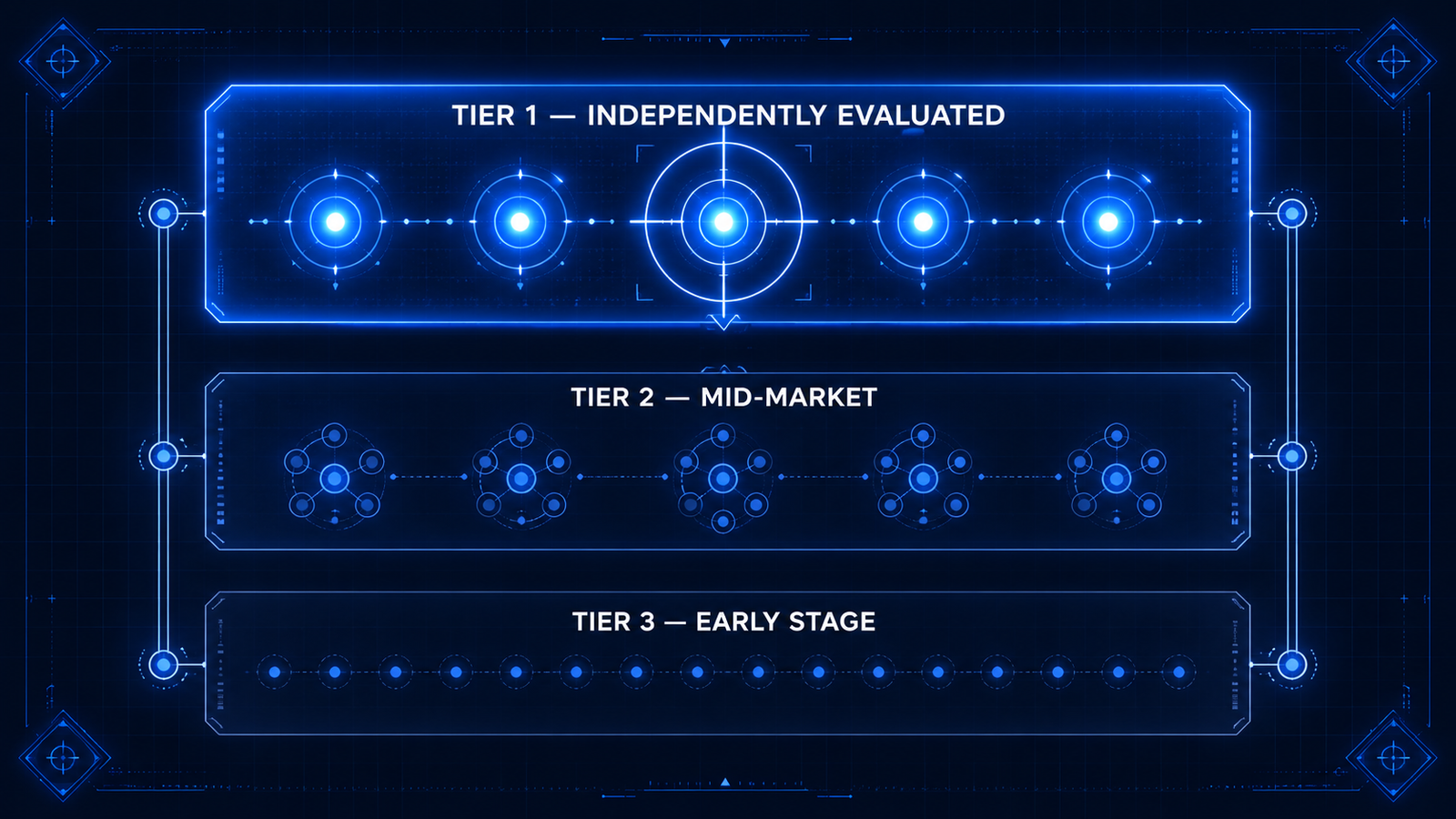
Tier 1 — The Gartner-Evaluated Platforms
These are the five vendors that have been through the Gartner I2C MQ evaluation. They are not equal — the quadrant positions matter — but they share the common quality of having been independently assessed against a defined set of capability requirements.
HighRadius
Who they are: Houston, TX. Founded 2006. VC-backed ($475M total raised, $3.1B valuation at last round in March 2021; no subsequent financing or IPO announcement identified in public sources reviewed through August 2026). The vendor's website states it serves more than 1,300 global businesses, with named clients including 3M, Unilever, and P&G. (Customer count from vendor website; figures vary across HighRadius pages — treat as directional.)
What the analysts say: Gartner I2C MQ 2024 Leader — highest position for both Ability to Execute and Completeness of Vision, third consecutive year. Named Leader in the Everest Group O2C PEAK Matrix 2025. IDC MarketScape for AR Software: Leader in both Enterprise and Mid-Market editions. Gartner Critical Capabilities for I2C 2024: ranked highest in all three use cases. Forrester named for cash application and deduction management AI implementation.[1][2][3][7]
What the AI actually does (GA, vendor-produced): 180+ AI agents across the I2C and R2R process, per vendor documentation. Cash application matching from emails, portals, lockboxes, and EDI with claimed 95%+ auto-match and 90%+ straight-through processing. Collections Agents that reprioritize accounts daily based on real-time customer behavior. Dispute Management Agent that auto-classifies claims, pulls backup documents, and predicts likely outcomes. Credit Risk Agent that tracks internal payment history and external credit events. Cash forecasting with claimed 95% accuracy. Connection to 500+ customer AP portals for automated portal-login tasks. (All figures vendor-produced.)[8]
The most credible case study: DXP Enterprises (industrial distribution, ~$1.6B revenue, publicly traded NASDAQ). 20-day DSO reduction, 40% collector productivity increase, item-level hit rate from ~20% to 90.5%, weekly exceptions from >1,000 to <300 in a 30-week rollout covering Cash Application, Collections, and EIPP. (Vendor-produced — DXP is a named public company, making the claim easier for buyers to validate through a direct reference conversation than an anonymous case study.)[9]
The honest limitations: G2 rating of 4.3/5 from approximately 232 reviews as of mid-2026; review counts change continuously. Public user reviews frequently raise implementation complexity and support responsiveness as evaluation considerations. Buyers should request implementation timelines and references from companies of similar size, ERP complexity, and payment volume. No external audit of the 95% match rate claim was identified in public sources reviewed.[10]
ERP integrations: SAP (including S/4HANA), Oracle, NetSuite, Microsoft Dynamics — confirmed via vendor documentation.
Stability: VC-backed. No public financing or IPO announcement identified through August 2026.
Esker
Who they are: Lyon, France / Middleton, WI. Founded 1985. Went private via Bridgepoint and General Atlantic, privatization effective March 3, 2025; previously publicly traded on Euronext. 2024 sales revenue of €205.3 million, up 15% year over year. Esker says thousands of companies use its automation platform globally.
What the analysts say: Gartner I2C MQ 2024 Leader — second consecutive year. Separately, Esker was named a Leader in Gartner's first-ever Magic Quadrant for Accounts Payable Automation (March 2025) — a meaningful cross-cycle recognition.[1][11]
What the AI actually does (GA, vendor-produced): Esker Synergy AI uses machine learning and deep learning for document extraction with claimed 90%+ extraction accuracy. Cash application matching, AI-automated collections sequencing, cash flow forecasting, payment trend analytics, and anomaly detection. GenAI enhancements launched iteratively through 2024–2025.[12]
The honest limitations: One TrustRadius reviewer specifically noted being encouraged to "pay extra to use their connected module" because "too many challenges occur when disconnected" — a signal of modular integration risk. No named, independently verifiable case studies with specific DSO or match rate numbers were found in public sources. The 2025 privatization by Bridgepoint introduces PE ownership and eventual-exit and ownership-transition considerations for long-term platform commitments.[13]
ERP integrations: SAP S/4HANA and broader SAP integrations confirmed. Oracle E-Business Suite confirmed. Verify live integration status directly for your specific ERP version.
Stability: PE-backed (Bridgepoint, General Atlantic) since March 2025. Revenue of €205.3M. PE ownership introduces exit timeline considerations.
Sidetrade
Who they are: Paris, France / London, UK. Founded 2000. Publicly traded (Euronext Growth Paris: ALBFR). Sidetrade describes its Data Lake as the world's largest proprietary O2C dataset. (This superlative is vendor-presented and has not been independently validated in sources reviewed.) The company says its O2C Data Lake contains more than $8.8 trillion in B2B transactions, 1.3 billion payment experiences, and data on 42 million buyer companies; by June 2026, the company was rounding the transaction figure to $9 trillion. Their AI model — "Aimie" — is trained on this proprietary dataset, not a generic LLM.[14]
Two institutional investors disclosed ownership positions in 2026: Briarwood Chase Management disclosed a stake exceeding 10% in March 2026, and Mission Trail Capital disclosed a 5.39% stake in May 2026.[14]
What the analysts say: Gartner I2C MQ 2024 Leader — third consecutive year. Sidetrade positions the scale of its proprietary Data Lake as a meaningful AI-training-data differentiator. This is a vendor claim that buyers should test against their own transaction mix.[1][14]
What the AI actually does (vendor-produced): Aimie AI predicts payment behavior, identifies at-risk accounts, generates autonomous collection scenarios, and benchmarks customer payment behavior against the proprietary dataset. Sidetrade reported in April 2026 that 24 Aimie Cash Collection agents were in production or rollout at large enterprises. The company's AI Cash Collection Agent is positioned to initiate debtor contact and execute collection actions within defined workflows. Collections automation, cash application, dispute management, and credit risk management are all informed by the proprietary data model. (These are company-reported deployment and capability claims.)[14]
The honest limitations: Sidetrade's public-facing case study library is less detailed in easily accessible public sources than HighRadius's. G2 comparison data is limited — practitioners should request peer references directly. North American buyers should validate local support coverage, contracting entity, data residency, and implementation capacity. The proprietary data advantage is also a dependency: evaluate Aimie's performance in your specific industry vertical before assuming the behavioral model translates to your customer mix.
ERP integrations: SAP, Oracle, Salesforce, and Microsoft integrations referenced in vendor materials. Verify certification and integration methodology directly for your ERP environment.
Stability: Publicly traded (Euronext Growth Paris: ALBFR), providing public financial reporting. No public financing or ownership change beyond the disclosed investor stakes was identified through August 2026.
Billtrust
Who they are: Hamilton Township, NJ. Founded in 2001. PE-backed (EQT Private Equity, acquired December 2022; previously NASDAQ-listed). No customer count independently verified in current first-party sources — verify directly.
What the analysts say: Gartner I2C MQ 2024 Challenger — with the explicit AI capability assessment noted above. Everest Group O2C PEAK Matrix 2025: Leader. G2: 21 consecutive quarters as a G2 Accounts Receivable Automation Leader, as announced for the Summer 2026 report. G2 listed Billtrust at 4.4/5 from 507 reviews in the sources reviewed; review counts change continuously. G2 Best Software Products 2026 recognition.[1][2][15]
What the AI actually does (GA, vendor-produced): Confidence-based ML cash application matching with claimed STP rates "often exceeding 90%," processing "up to 40 exceptions per hour." In 2025, Billtrust announced AI-powered Collections Optimized Procedures and Dynamic AI Credit Lines. Billtrust Autopilot — a multi-agent AI assistant — was announced in 2025; broad general availability was not independently confirmed in public sources reviewed through August 8, 2026. In March 2026, Billtrust announced additional AI-driven Buyer Payment capabilities. Whether these announced capabilities represent a genuine architectural catch-up or are staged roadmap releases requires independent verification.[16]
The important context: Forrester's 2025 AR use case report named Quadient and HighRadius for cash application AI examples — not Billtrust. Gartner's 2024 AI capability assessment was a direct challenge to Billtrust's marketing positioning. Billtrust's 2025 multi-agent announcement followed Gartner's 2024 assessment, but the public sources reviewed do not establish whether it was a direct response. The 21-quarter G2 Leader streak is a meaningful customer-market signal, though buyers should review current feedback from customers with comparable ERP, payment-channel, and implementation requirements.
The most credible case study: CDW Corporation (Fortune 200, IT services). Electronic presentment rose to 80%; postage savings exceeded $2M; straight-through processing improved from 58% to 79%; additional 12,000 payments matched monthly. (Vendor-produced — CDW is a named Fortune 200 company.)[17]
Billtrust's genuine strengths: Billtrust's established B2B payments network and long operating history are important platform strengths. The breadth of the platform — invoicing, payments network, cash application — and the depth of the installed customer base are real advantages even where AI depth trails the Gartner Leaders quadrant.
ERP integrations: 40+ certified connectors including SAP ECC and S/4HANA, Oracle, NetSuite, Microsoft Dynamics.
Stability: PE-backed by EQT; private-equity ownership introduces eventual-exit considerations.
Emagia
Who they are: Santa Clara, CA. Founded ~1999–2000. Privately held. Claims to have processed over $900 billion in AR across 90+ countries, 25 languages. (Vendor-produced.)
What the analysts say: Gartner I2C MQ 2024 Visionary — third consecutive year (acknowledges vision, raises execution questions vs. Leaders). Everest Group O2C PEAK Matrix 2025: Leader — the Everest commentary specifically noted Emagia's "ever-growing library of pre-built agents" and its "autonomous and intelligent receivables operations" as differentiators. Emagia's 2024 Gartner Visionary position and 2025 Everest Leader designation reflect different analyst assessments and methodologies; buyers should review the underlying criteria rather than treating them as directly comparable progression.[1][2]
What the AI actually does (GA, vendor-produced): GIA generative AI copilot with hundreds of AI agents claimed. Cash application, collections orchestration, deductions management, credit scoring, and multi-entity/multi-currency operations (135+ currencies, 25 languages). Agent Studio for creating custom AI agents. Claimed 80–90% autonomous operations.[18]
The honest limitations: Emagia does not appear prominently on G2, limiting user review comparison. Privately held; public financial transparency is limited. Public review volume and third-party market visibility appear more limited than for some larger U.S.-based competitors; buyers should prioritize direct reference checks. Gartner has not revisited its I2C MQ assessment as of this writing.
ERP integrations: SAP, Oracle, NetSuite, Microsoft Dynamics, JD Edwards, Sage, 170+ banks, 100+ AP portals.
Stability: Privately held; public financial transparency is limited.
Tier 2 — The Mid-Market Challengers
These platforms were not included in the May 2024 Gartner I2C MQ assessment. That does not make them wrong choices — but it means buyers lack the independent competitive benchmarking that Gartner provides, and must rely more heavily on G2 reviews, vendor case studies, and direct reference conversations.
Tesorio
Best for: Organizations with AR portfolios concentrated in technology and SaaS-adjacent customers. Tesorio's public customer references include GitLab, Veeva, Smartsheet, Couchbase, and UiPath.[19] G2 listed Tesorio at 4.7/5 from 240 reviews in the sources reviewed; review counts change continuously.[20]
AI distinctives: Tesorio documents its Supplier Portal Agent as a capability for automating invoice submission into AP portals such as Ariba and Coupa. Cash flow forecasting and collections automation are confirmed as GA capabilities.[19]
The honest limitation: Tesorio's public customer references include technology and SaaS-adjacent companies; manufacturing, distribution, and CPG deployments are less documented in publicly available sources. The latest widely reported funding round was Tesorio's July 2022 Series B; no subsequent public round was identified in sources reviewed through August 2026.[21]
ERP integrations: NetSuite, Sage Intacct, Workday Financial Management (core); SAP, Oracle, Microsoft Dynamics, Acumatica, QuickBooks, Salesforce, Zuora (expanded).
Versapay
Best for: Organizations where buyer collaboration and self-service payment portals are the primary leverage point. KeyBank's KeyTotal AR product remains marketed as powered by Versapay — a meaningful third-party distribution and market-validation signal.[22]
AI distinctives: The "Collaborative AR" model is a genuine differentiation — reducing dispute and deduction friction at the source rather than after the fact.
The honest limitation: The model's value depends heavily on buyer-side portal adoption. G2 reviews document payment issues including limited non-USD support. SAP S/4HANA integration is not prominently documented in publicly accessible sources — verify directly for SAP environments.[24]
ERP integrations: Microsoft Dynamics, NetSuite, Sage Intacct confirmed. SAP needs independent verification.
Quadient AR automation (formerly YayPay)
Who they are: Quadient AR automation, formerly YayPay, is the accounts receivable automation product within Quadient's portfolio. Parent company Quadient (Euronext Paris: QDT) is a publicly traded technology company. AR automation sits alongside Quadient's mail solutions, parcel locker systems, and customer communications management businesses.[25]
Best for: Organizations already in the Quadient ecosystem, or those wanting a publicly-traded parent company's financial stability combined with Forrester-recognized AI capabilities.
AI distinctives: Named by Forrester for ML-based inbound email categorization and genAI-generated collection email replies — two of the more specific, independently confirmed AI capabilities in the Tier 2 group. Cash application automation also Forrester-named.[3]
The honest limitation: AR automation is not Quadient's core business, which may affect R&D investment priority compared to AR-pure-play vendors. Quadient AR was not included in the May 2024 Gartner I2C MQ assessment.[25]
ERP integrations: Salesforce, NetSuite, Sage Intacct, QuickBooks Online confirmed. SAP integration not prominently featured — verify directly.
Stability: Parent company Quadient (Euronext Paris: QDT) is publicly traded. R&D budget competes internally across multiple Quadient business lines.
Gaviti
Best for: Mid-market companies (51–500 employees) focused primarily on collections automation. G2 listed Gaviti at 4.4/5 from 190 reviews as of August 7, 2026; review counts change continuously.[26]
The honest limitation: Buyers should test exception handling, workflow configurability, and reporting depth during evaluation, and review current G2 and Capterra feedback for patterns relevant to their use case. ERP integration specifics for SAP S/4HANA and Oracle were not independently verifiable in public sources — request a confirmed integration matrix before procurement. Gaviti announced a $9 million Series A in April 2022; no later public financing was identified in the sources reviewed through August 8, 2026.[27]
Kolleno
Best for: SMB to lower mid-market collections automation. London-based, founded 2020 by ex-Goldman Sachs professionals.
The honest limitation: The latest publicly identified funding announcement was a £4 million seed round in March 2022. Enterprise buyers should conduct standard vendor-risk diligence, including financial-stability, support-capacity, and continuity questions. No Gartner, Forrester, or Everest Group recognition. ERP integration specifics were not independently verified for SAP S/4HANA or Oracle — practitioners should request a confirmed integration matrix.[27b]
Order2Cash note: Order2Cash (Amsterdam, Netherlands) was included in this research scope as a Tier 1 candidate. It was omitted from the platform sections because no independently verifiable information — analyst recognition, named case studies, ERP integration certifications, or funding history — was found in publicly accessible sources as of this writing. The absence of public data does not disqualify the platform; it means practitioners must conduct direct vendor evaluation without the benefit of third-party sourcing.
Tier 3 — The Early-Stage Agent Platforms
These platforms represent the next generation of agentic AR architecture. None were included in the May 2024 Gartner I2C MQ. No independently verified enterprise-scale production case studies were identified in the public sources reviewed for this article. They are genuine architectural possibilities — some with notable investor backing — but the appropriate framing is "emerging option requiring careful evaluation," not "production-ready alternative to established platforms."
Paraglide AI (Malmö, Sweden; founded by ex-GetAccept founders): €4.2 million / $5 million seed round, January 2026, co-led by Bessemer Venture Partners and DN Capital, with participation from Born Capital and The Nordic Web Ventures. Paraglide's January 2026 seed round was co-led by Bessemer Venture Partners and DN Capital; investor backing should not be treated as evidence of enterprise production readiness. Multi-agent architecture for two-way billing communication. Paraglide reports that customers including Choco and Spiideo achieved up to a 34% DSO reduction. (Vendor-produced — early customer set; treat with caution.) Primarily a communication workflow platform; cash application and full dispute management are not confirmed as GA.[28]
Lunos.ai (New York, NY): An AI agent for two-way collections communication. Limited independent public coverage was identified in sources reviewed through August 2026 — investor names, round size, and GA product scope could not be independently verified. Appropriate for a "vendors to watch" list only, with explicit acknowledgment of limited public validation.[29]
Hyperbots (Dover, DE; founded 2023): Developing HyperLM — a proprietary finance LLM — alongside cash application and invoice processing agents. Independent verification of funding details and product milestones was not available in public sources reviewed through August 2026. Treat all performance and roadmap claims as vendor assertions until release documentation or customer evidence is available.[30]
Ledge (New York; founded 2022): Ledge positions itself as a payment reconciliation engine for fintech companies and payment operations teams. Buyers whose O2C runs on B2B invoices and trade credit should verify whether the platform addresses their workflow before including it in a formal evaluation.[28b]
Stuut (emerging, 2026): A new AI-native cash application platform beginning to position in the mid-market. Vendor claims include 95%+ matching accuracy and 3–4 day API integration for SAP, Oracle, NetSuite, and Dynamics environments. (Vendor-produced claims; no independent validation available as of this writing.) Worth monitoring for mid-market cash application evaluations in 2026–2027.[31]
The Independent Benchmark Gap
Here is something the vendor marketing will never tell you: no independently audited, publicly available cross-vendor benchmark for cash-application match rate, straight-through processing, or DSO reduction was identified in sources reviewed through August 8, 2026.
According to a public summary of the IOFM 2025 AR Benchmarking Report, automated AR teams achieve 10-day faster DSO and 2x productivity gains versus manual teams — the most credible independent directional data point identified, comparing automated operations against manual, not ranking specific platforms against each other. (The underlying gated report was not independently reviewed for this analysis.)[32]
The match-rate and DSO figures cited in this article are primarily vendor-reported and were not independently audited in publicly available sources reviewed for this analysis. No Gartner Peer Insights-style cash-application-accuracy benchmark or J.D. Power-style DSO comparison by platform was identified in the public sources reviewed. HighRadius published a "2026 Automation Benchmark Report" — this is vendor-produced content, not an independent industry benchmark.[33]
The practical implication for buyers: The only way to get a platform-comparative benchmark is to ask vendors for named reference customers in your industry, call those customers directly, and ask them what their measured baseline was before implementation and what their current measured rate is — with the measurement methodology explained.
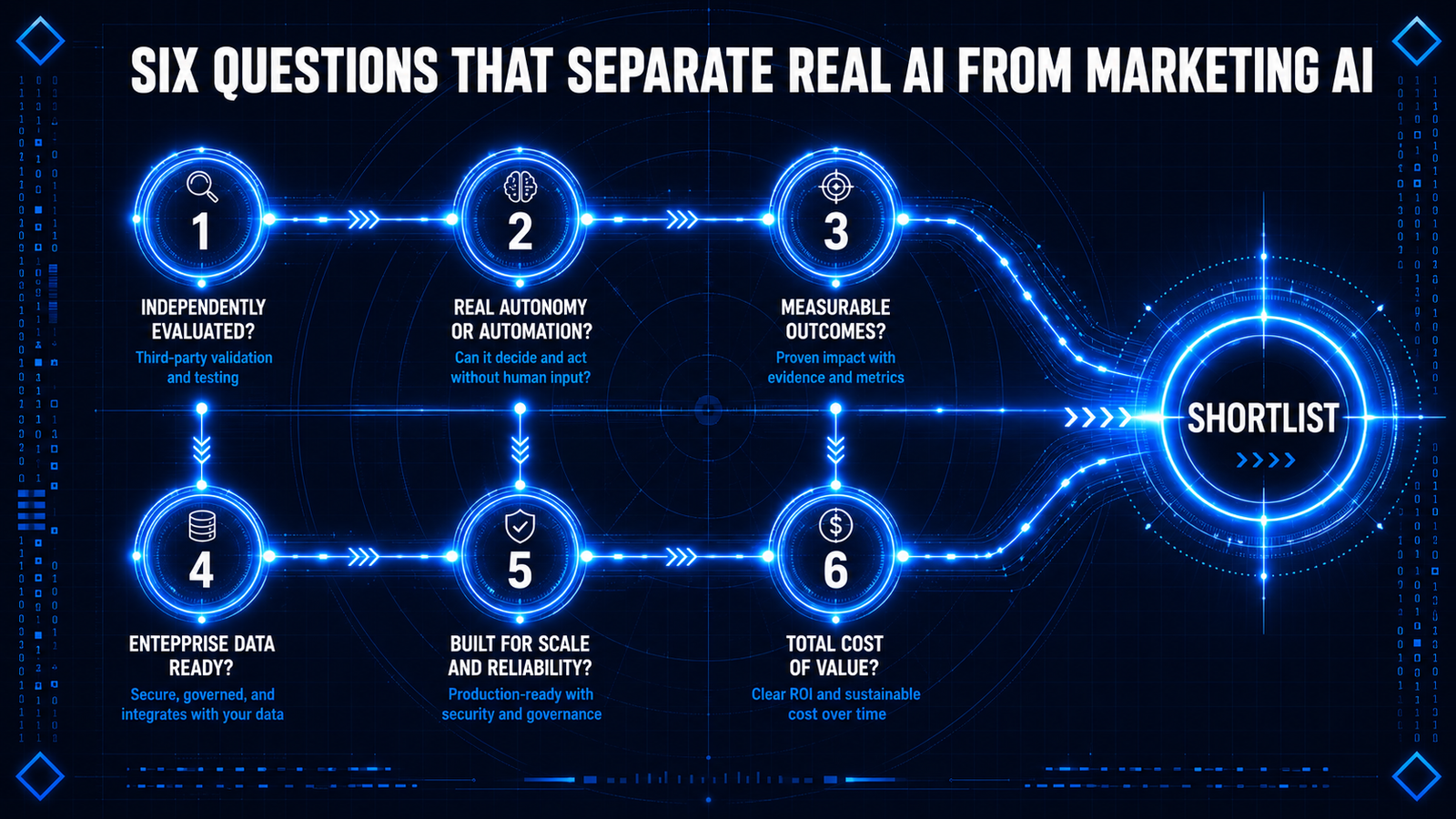
Six Questions That Separate Real AI from Marketing AI
These questions come directly from what the independent research — and the Gartner Billtrust assessment — revealed about where AI depth actually varies across these platforms:
1. Is this feature GA, or is it on the roadmap? Ask for the feature release date and the percentage of your installed customer base actively using it. Billtrust's Autopilot broad general availability has not been independently confirmed in public sources reviewed through August 8, 2026; HighRadius's 180+ agents are claimed as GA. Those are different conversations.
2. What is the model training data? Sidetrade says its Data Lake contains approximately $9 trillion in proprietary B2B payment data covering 42 million buyer companies — a fundamentally different AI substrate than a generic LLM wrapper, if the deployment model matches your transaction type. Ask vendors specifically: is the AI model trained on proprietary customer payment data or on a foundation model fine-tuned with limited domain data?
3. What is the claimed metric and how is it measured? "95% auto-match rate" can mean invoice-level match, dollar-level match, or payment-level match across very different customer populations. Ask for the measurement methodology and the population it applies to — specifically including your payment type distribution (EDI, portal, email remittance, lockbox).
4. Can I speak with a named reference customer in my industry who can independently verify these results? Not a vendor-curated case study. A named customer you can call directly and ask: what was your baseline before, what is your rate now, and how do you measure it?
5. Is the AI supervised or autonomous — and where exactly are the human checkpoints? Ask each vendor which actions require human approval before ERP write-back, what confidence thresholds apply, and how exceptions are routed and reviewed.
6. What happens when the AI fails? Exception handling workflow quality is as important as the headline match rate. A platform that auto-posts 92% of payments correctly and has a well-designed exception queue is more valuable than one that posts 95% correctly but has poor exception management for the 5% it misses.[6]
How to Use This for Your Shortlist
If you are a finance operations leader doing a serious platform evaluation right now, the research points to a practical shortlisting approach.
Start with the Gartner five as your anchor for the enterprise tier: HighRadius, Esker, Sidetrade, Billtrust, and Emagia. These are the platforms that have been through the May 2024 Gartner I2C MQ evaluation. Within that five, the relevant differentiators are: AI capability depth and data scale (HighRadius and Sidetrade are positioned here — Sidetrade's data lake of approximately $9 trillion in B2B transactions with 24 agents reported in production is a meaningful development to evaluate), platform breadth and payments network (Billtrust's established network and long operating history are genuine strengths), and your ERP environment (SAP shops should look most carefully at HighRadius and Esker given their documented SAP integration depth). Global buyers should compare regional support, language coverage, local compliance requirements, data residency, and ERP localization by vendor.
Add Quadient AR to the shortlist if Forrester recognition matters to your procurement process, or if genAI-assisted collections email is a priority capability — it is the only Tier 2 platform with specific Forrester use-case validation.
Add Tesorio if your AR portfolio is concentrated in technology and SaaS-adjacent customers and you want a platform with a strong current G2 rating and publicly named customer references.
Consider Versapay if your strategic priority is reducing disputes and deductions at the source through buyer-facing self-service portals rather than after-the-fact automation. KeyBank's continued marketing of KeyTotal AR as powered by Versapay is a meaningful third-party distribution signal.
For Tier 3 platforms: these are appropriate for organizations willing to be early adopters and move at startup timelines. Investor backing should not be treated as evidence of enterprise production readiness. Pilot them on a non-critical segment if you want to test the architecture; do not replace your production platform with them yet.
The Honest Summary
The AR automation platform market in 2026 has five vendors that went through the May 2024 Gartner I2C MQ evaluation, a second tier of well-reviewed mid-market alternatives, and a growing number of genuinely agentic early-stage platforms that will matter more in two to three years.
The most useful thing Gartner did in its 2024 MQ was put an AI-capability assessment on record — publicly, in a vendor evaluation that vendor has to live with. The FTC and SEC have reinforced the same point through enforcement action. No independently audited cross-vendor benchmark for match rates or DSO reduction was identified in sources reviewed for this analysis. And the most important due diligence tool you have is not an analyst report — it is a direct conversation with a named reference customer who can tell you what their baseline was, what their current rate is, and how they measured the change.
The platforms that can give you that conversation — with a customer in your industry, at your transaction volume, on your ERP — are the platforms worth shortlisting. The ones that can't are telling you something important.
REFERENCES
- Gartner Magic Quadrant for Invoice-to-Cash Applications, May 6, 2024 (subscription required) — https://www.gartner.com/en/documents/5406263
- Everest Group O2C Products PEAK Matrix 2025 (October 2025) — HighRadius | Billtrust | Emagia
- Forrester — Top AI Use Cases for Accounts Receivable Automation in 2025 (March 20, 2025) — https://www.forrester.com/blogs/top-ai-use-cases-for-accounts-receivable-automation-in-2025/
- AR Automation Market Sizing — Mordor Intelligence (March 2, 2026) — https://www.mordorintelligence.com/industry-reports/accounts-receivable-automation-market
- FTC Operation AI Comply launch (September 25, 2024) — FTC | DLA Piper, Air AI analysis (August 8, 2025) — DLA Piper | SEC: Delphia/Global Predictions (March 18, 2024) — SEC | SEC: Presto Automation (January 14, 2025) — SEC | SEC: Nate/Saniger (April 9, 2025) — SEC
- AI Authenticity Checklist — derived from research methodology; cross-referenced with Gartner MQ Billtrust assessment
- Gartner Critical Capabilities for Invoice-to-Cash Applications 2024 — via HighRadius licensed excerpt: https://www.highradius.com/resources/reports/gartner-ranked-highradius-top-1-vendor-in-all-three-use-cases/
- HighRadius product capabilities — highradius.com (vendor-produced) | April 15, 2025, vendor-produced
- HighRadius — DXP Enterprises case study — vendor-produced
- HighRadius G2 reviews — https://www.g2.com/products/highradius/reviews (accessed August 2026)
- Esker — Gartner AP Magic Quadrant recognition (March 24, 2025) — https://www.esker.com/company/press-releases/esker-named-leader-first-ever-gartner-magic-quadrant-accounts-payable/
- Esker Synergy AI — https://www.esker.com/order-to-cash-solutions/ (2025, vendor-produced)
- Esker privatization — Bridgepoint announcement (March 3, 2025): Bridgepoint | Esker Q4 2024 sales activity (January 14, 2025): Esker
- Sidetrade O2C Intelligence 2030 (April 8, 2026) — Sidetrade | Sidetrade About Us (June 2026) — Sidetrade | Briarwood Chase Management stake disclosure (March 4, 2026) — Sidetrade | Mission Trail Capital stake disclosure (May 19, 2026) — Sidetrade | Sidetrade Euronext 20-year listing anniversary (July 7, 2025) — Sidetrade
- Billtrust G2 Summer 2026 Leader announcement (June 4, 2026) — Billtrust | Billtrust G2 Winter 2026 (December 11, 2025) — Billtrust | Billtrust G2 product page — G2 (accessed August 2026) | G2 Best Software Products 2026 (March 11, 2026) — PR Newswire
- Billtrust AI capabilities announcement (August 19, 2025) — Billtrust | Billtrust product site (June 18, 2026, vendor-produced) — Billtrust
- Billtrust — CDW Corporation case study (vendor-produced) — Case Studies
- Emagia GIA and product capabilities (2025, vendor-produced) — Emagia | Everest Group commentary (October 22, 2025) — Emagia
- Tesorio product capabilities and customer references (2026, vendor-produced) — Tesorio | Customers
- Tesorio G2 reviews (accessed August 2026) — https://www.g2.com/products/tesorio/reviews
- Tesorio funding history — https://www.crunchbase.com/organization/tesorio
- KeyBank KeyTotal AR (current product page) — https://www.key.com/businesses-institutions/solutions/payments/keytotal-ar.html
- Versapay product — https://www.versapay.com
- Versapay G2 reviews — https://www.g2.com/products/versapay/reviews
- Quadient AR automation (2026) — Quadient | Quadient (Euronext Paris: QDT) — publicly traded; current financial filings available via Euronext and Quadient investor relations
- Gaviti G2 reviews (modified August 7, 2026) — https://www.g2.com/products/gaviti/reviews
- Gaviti Series A announcement (April 2022) — https://techtrends.africa/gaviti-completes-9-million-in-a-series-a-funding-round/
- Kolleno — company background and £4 million seed round, March 2022 (vendor/company materials; no independent funding-database confirmation identified in sources reviewed) — verify directly at kolleno.com
- Paraglide AI seed round — EU Startups (January 27, 2026): EU Startups | Pulse 2.0 (January 28, 2026): Pulse 2.0
- Ledge product positioning — ledge.co (vendor-produced; verify scope directly)
- Lunos.ai — limited independent public coverage identified through August 2026; verify directly at lunos.ai
- Hyperbots — limited independent public coverage identified through August 2026; verify directly at hyperbots.ai
- Stuut comparison article (May 28, 2026, vendor-produced) — https://www.stuut.ai/blog/highradius-vs-stuut-cash-application-head-to-head
- IOFM 2025 AR Benchmarking Report — public summary via LinkedIn post by David Schmidt (October 24, 2025): LinkedIn | IOFM benchmarking portal: IOFM
- HighRadius 2026 Automation Benchmark Report (vendor-produced; not an independent industry benchmark) — https://www.highradius.com/